A Drug Free Approach
to Help with Brain Regulation
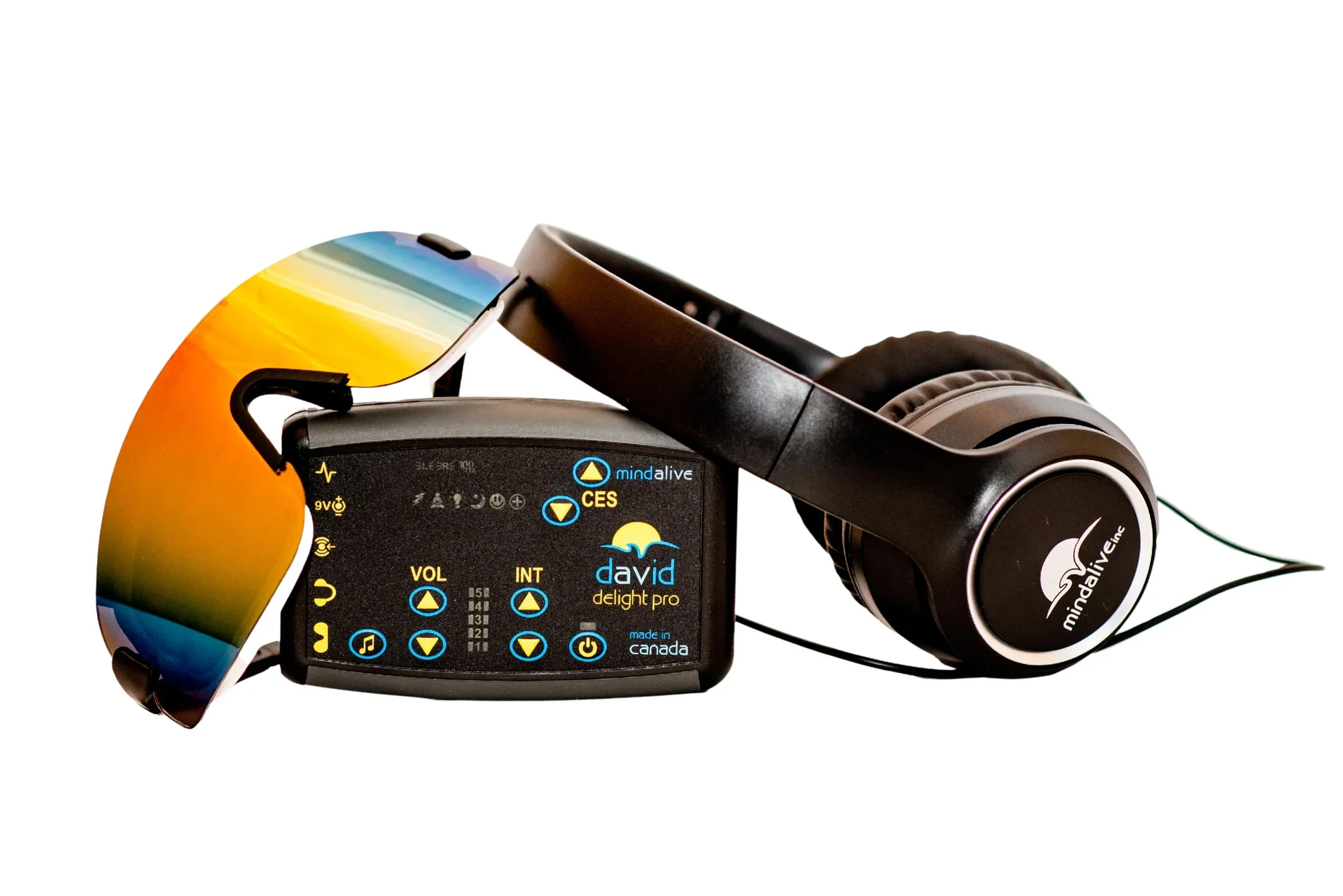
Audio-Visual Entrainment (AVE) and Cranial Electrotherapy Stimulation (CES) are non-invasive technologies designed to support relaxation, focus, sleep, and emotional regulation. These tools use light, sound, and gentle electrical stimulation to encourage the brain and nervous system to shift into more balanced states.
While AVE/CES is not a cure for mental health conditions, many people find it to be a helpful complement to therapy, mindfulness practices, and other wellness approaches.
How I integrate AVE/CES into therapy
As a trauma-informed therapist trained in Brainspotting, EMDR, and somatic approaches, I use AVE/CES as an optional adjunct to therapy. Some clients use it before a session to help calm and regulate the nervous system, while others incorporate it during or after processing work to support recovery and integration.
There are also times when clients arrive feeling mentally exhausted, overwhelmed, or depleted and find it difficult to engage in deeper therapeutic work. In these situations, AVE/CES can provide an opportunity to pause, reset, and support the nervous system before returning to more active processing.
The goal is not simply symptom reduction, but helping clients build greater nervous system flexibility, resilience, and capacity for navigating everyday life
-
How AVE Works
When the brain is exposed to rhythmic light and sound patterns, it naturally begins to follow those rhythms, a process known as "entrainment." Different frequencies can be used to support relaxation, alertness, meditation, or sleep preparation.
-
How CES Works
CES delivers a very small electrical current that interacts with the brain and nervous system. Research suggests it may influence neurotransmitter activity and help regulate stress responses, supporting a calmer and more balanced state.
-
During an AVE/CES session, clients typically sit comfortably on a couch or recline in a chair while the room is dimly lit. Clients wear specialized light glasses and headphones as part of the AVE system, with the option to incorporate CES using small ear clips attached to the earlobes.
Most people need a few minutes to adjust to the rhythmic light and sound patterns. As the session progresses, clients often describe entering a deeply relaxed, meditative, or dreamlike state. Those using CES may notice a mild tingling sensation or occasional lightheadedness as they adjust to the stimulation.
Sessions generally last between 15 and 30 minutes. By the end of the session, many clients report feeling calmer, more grounded, mentally clear, or energized, depending on the program used and their individual response.
-
Most clients feel nothing or only a mild tingling sensation. I can always adjust the intensity if needed to be lower.
-
This varies based on your goals. Some clients notice benefits after a single session, while others prefer ongoing use.
-
No. AVE/CES is intended to complement—not replace—therapy, medical care, or prescribed medications.